GTA VI’s first trailer does not introduce its world from one stable viewpoint.
It moves between a character-centered opening, broad city views, public spectacle, vertical social-media imagery, and a criminal partnership.
That movement is the subject here.
I am reading Trailer 1, released in December 2023, as a particular piece of promotional filmmaking. This is not a summary of later announcements, and its original release card should not be used as current launch guidance.
What interests me is how the camera changes our relationship to Vice City. Sometimes we survey the place. Sometimes we appear to be watching somebody else’s recording. Eventually, attention returns to two people.
ON THIS PAGE
Begin with a person
Expand into the city
A world already being recorded
Editing is not a map
Return to the partnership
FAQ
Begin with a person
The opening prison material gives the trailer an individual point of entry through Lucia.
Before the city becomes a montage of beaches, crowds, and public behavior, an institutional setting establishes that one person already has a difficult relationship with authority.
The contained presentation matters.
A character and an immediate situation are easier to hold onto than a rapid sequence of landmarks. The viewer has a person to carry forward when the trailer begins expanding outward.
I read that opening as an anchor.
It gives the spectacle a potential emotional center while withholding much of Lucia’s history.
That does not make the scene a complete explanation of the game’s opening hours. A trailer can rearrange moments, omit transitions, and place dialogue over images from elsewhere.
Its narrative order is promotional order until the story establishes otherwise.
The visual purpose is still clear: the introduction begins with a human subject rather than asking a skyline to supply all the emotional weight.
Expand into the city
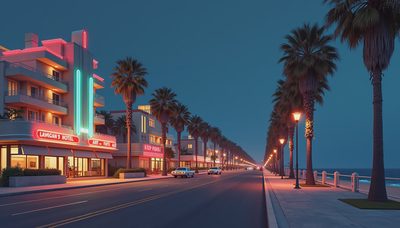
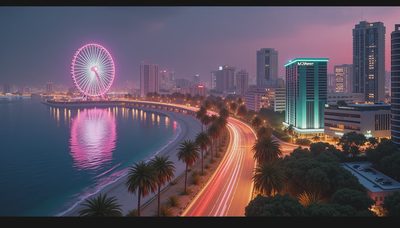
The trailer then makes room for broader views of landscape, coastline, urban density, and crowded public space.
Those images change scale quickly.
An aerial allows us to survey an environment. A closer crowd image replaces that overview with bodies, clothing, gestures, and social performance.
The world feels larger because it contains both geography and people occupying it.
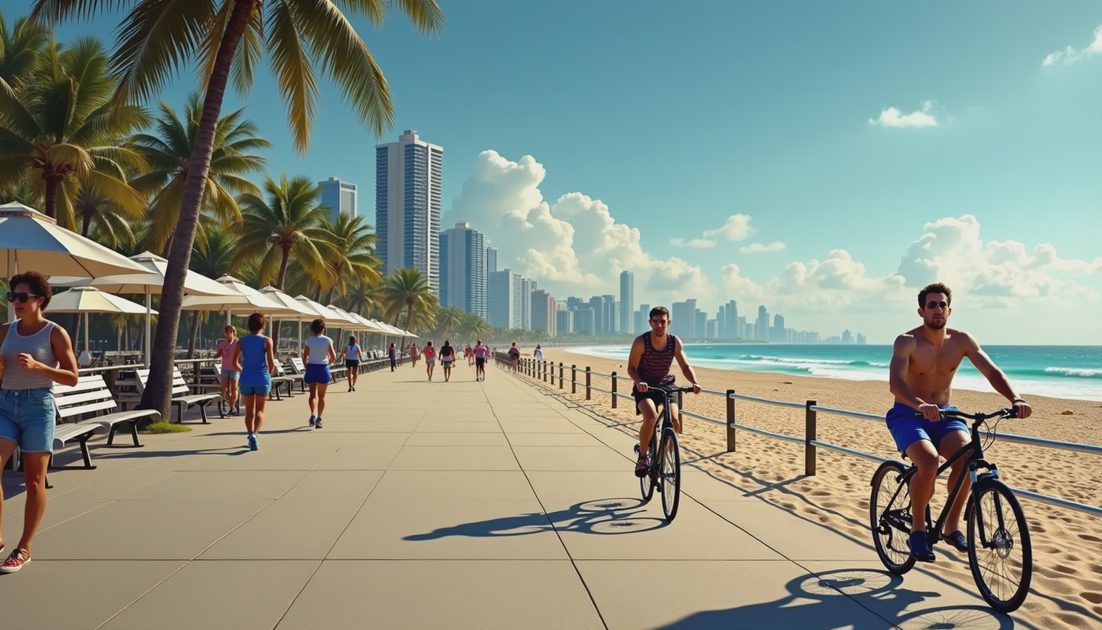
The useful unit is often the relationship between shots.
A wide view establishes extent. A closer one establishes texture. Neither has to explain everything if the next image contributes a different kind of information.
Camera relationship | What it emphasizes | What it cannot establish alone |
|---|---|---|
Broad overview | Geography and density | Complete playable boundaries |
Street or crowd proximity | Social detail | Persistent population counts |
Character-centered framing | Expression and relationships | Full mission order |
Phone-style imagery | Public self-presentation | A player-operated social application |
I would avoid treating the fastest montage moments as a checklist of systems.
A situation can contribute atmosphere without announcing a repeatable activity.
A crowded beach, for example, has an immediate visual function even before anyone knows how that exact scene relates to player control.
A world already being recorded
The vertical social-media-style clips are the trailer’s most distinctive change in visual grammar.
They make the fictional world appear to produce its own images.
That differs from a conventional cinematic camera. A phone-style frame suggests that someone within the world considers an incident worth recording, sharing, or performing for.
The result is a second layer of spectacle.
We are not only seeing unusual events. We are seeing a culture that turns events into attention.
My reading is that the format connects Vice City with contemporary habits of watching and self-display.
The humor often depends on the distance between what is happening and how casually it is presented to an audience.
The city becomes both a place to inhabit and a stream of images its inhabitants circulate.
That is an interpretation of the presentation.
It is not confirmation that players can upload clips through an in-game application, manage followers, or use every interface shown.
The format itself already carries meaning.
A vertical crop changes what fits in view. It affects how close an incident feels and whether the moment resembles a private encounter, a performance, or a public post.
The trailer can use that visual language without explaining an interactive system behind it.
Editing is not a map
Fast cuts can make places feel connected even when their actual relationship remains unknown.
That is effective filmmaking and unreliable cartography.
A road shot followed by a beach shot does not establish a direct route. A nighttime image placed beside daylight does not demonstrate a time-lapse feature.
The trailer creates associations through proximity. Geography requires stronger evidence.
I find it useful to keep two questions separate:
What sequence does the edit create?
What spatial connection does the footage actually show?
The first invites analysis of rhythm and contrast. The second requires identifiable continuity rather than adjacent cuts.
This distinction matters for camera options too.
A promotional aerial or intimate close-up may serve the trailer without becoming a selectable gameplay perspective.
The safest analysis describes what the presentation achieves before turning toward what a player may eventually control.
Return to the partnership
Later, attention narrows around Lucia and the male partner shown with her. Criminal imagery and the emphasis on trust bring the montage back toward a relationship.
After so much public spectacle, that narrowing feels deliberate to me.
The city can be enormous, noisy, and crowded while the immediate stakes remain concentrated between two people.
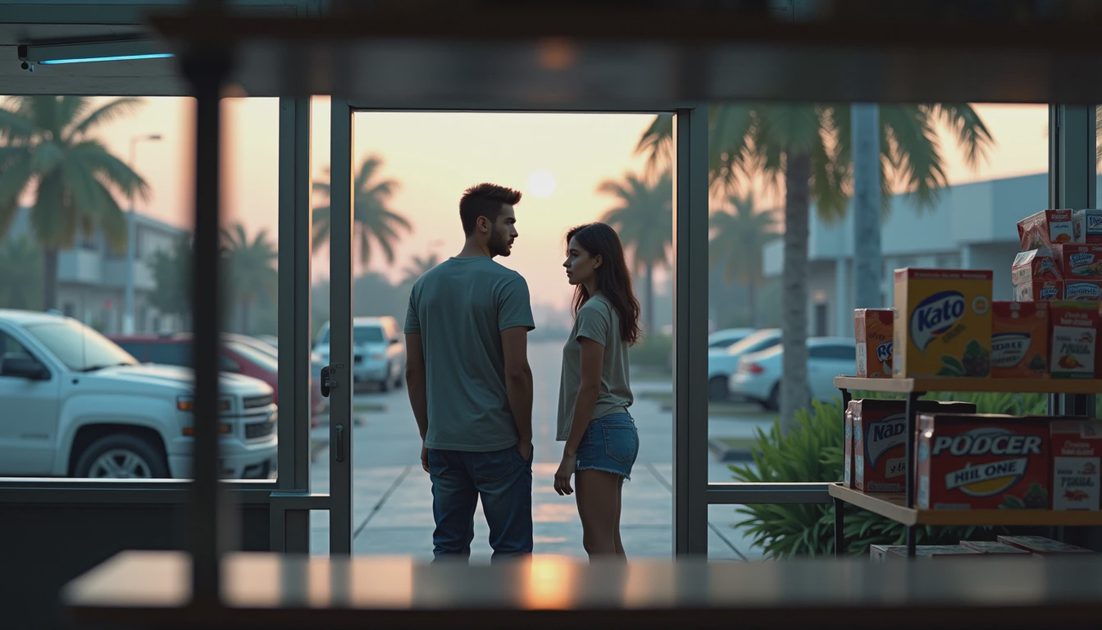
The trailer therefore makes three broad movements: establish a person, expand the world, and bring the person into a partnership.
That pattern is more useful than counting cuts without asking what they accomplish.
It also leaves important questions unanswered.
The trailer does not establish the complete balance of control, loyalty, or conflict between the pair. Those uncertainties are part of the invitation to follow the story.
The camera brings them close enough to matter without making their relationship fully knowable.
Why the changing distance works
What I appreciate most is the refusal to let one kind of image do every job.
The overview provides scale. Street proximity provides texture. Embedded social imagery provides cultural context. Character framing gives the spectacle a possible emotional center.
That range helps the trailer introduce a world without presenting it as a tourism reel alone.
There is still promotional selection at work. Every image has been chosen to produce an impression.
Recognizing that does not make visual analysis pointless. It makes the choices worth examining.
The useful question is not whether the trailer shows everything. It is how the selected viewpoints shape what we expect the world to feel like.
FAQ
Is every shot a demonstration of playable gameplay?
The trailer does not classify every shot that way.
Cinematic presentation should not automatically become a promise about player control.
Do the social clips confirm an interactive social network?
No. They support a reading of contemporary media culture, while a gameplay system requires separate evidence.
Should the original end card be used for current release information?
No. This article analyzes the construction of the 2023 trailer rather than tracking launch announcements.
The part that stays with me is the changing distance: the camera lets us survey a city, then reminds us that its story still needs people close enough to trust or disappoint each other.
There’s always a story on the next block.