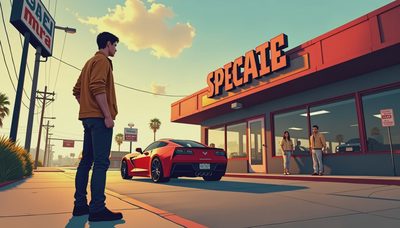
GTA V’s advertising works best when the product becomes an excuse to sell a worldview. A burger offers a version of the past. A beer offers a version of masculinity. A financial brand sorts people by how they spend.
Three examples make that pattern clear: Up-n-Atom, Pißwasser, and Shark’s Cash Cards commercial. This is a reading of their advertising concepts and documented commercial material, not a transcript or a guide to buying anything.
The distinction matters with Shark in particular. Its fictional branding also intersects with real GTA Online purchases. That overlap makes the satire more complicated than a joke about an imaginary company.
ON THIS PAGE
Up-n-Atom sells a usable past
Pißwasser sells a performance
Shark turns identity into spending
Why these interruptions matter
FAQ
Up-n-Atom sells a usable past
The Up-n-Atom commercial uses the chain’s 1950 origin story as a promise of a better, simpler America. The joke is that the supposedly reassuring past arrives with attitudes the advertisement does not recognize as disqualifying.
That is more specific than a general joke about unhealthy food. The burger becomes a delivery mechanism for nostalgia. Buying lunch is presented as a way to reconnect with a national story.
The interesting move is the confident tone. Advertising can make a claim feel respectable through rhythm and certainty before the listener has examined it.
My reading is that the commercial exposes nostalgia as a selective product. It keeps the confidence and convenience of the imagined past while making its exclusions audible.
The joke therefore operates on two levels: the chain wants to sell food, and the ad wants the customer to buy a flattering account of history along with it.
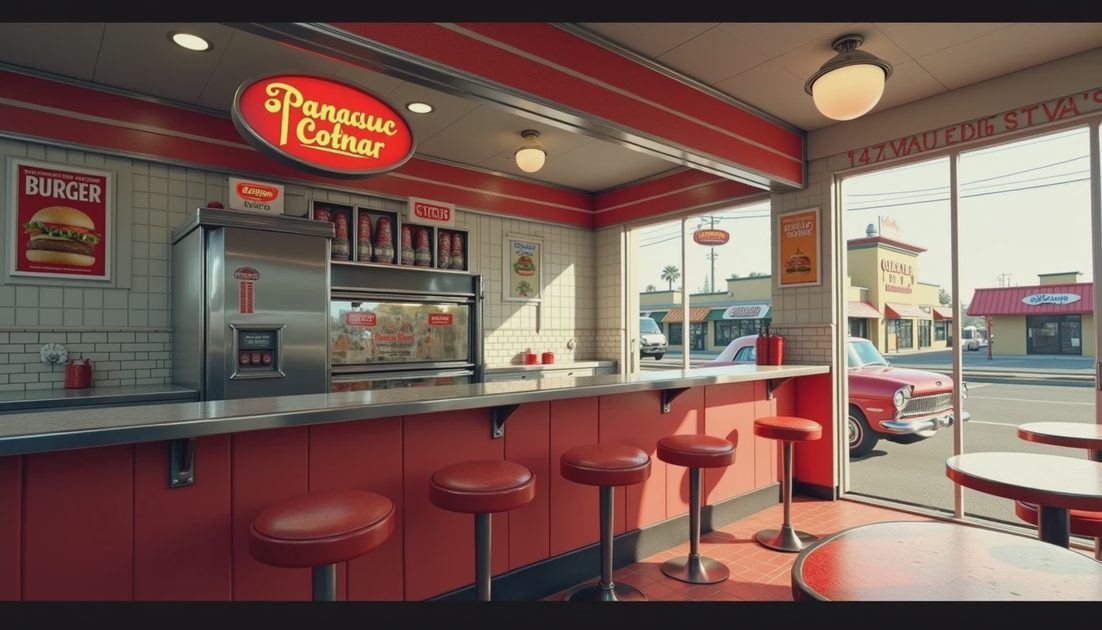
That second level is what gives a fictional burger chain a place in the world. It suggests not only what residents eat, but what stories they use to justify familiar habits.
Pißwasser sells a performance
The Pißwasser advertising combines beer with an exaggerated image of hard-working, aggressively ordinary masculinity. Its musical presentation gives the pitch a communal, easy-to-repeat quality.
The product’s identity also contains a contradiction: an imported German beer is used to support a loudly American performance. The mismatch is part of the joke rather than an error to explain away.
I find that tension more revealing than the brand name by itself. The advertisement does not need a consistent worldview as long as its audience recognizes the emotional costume being offered.
This is also where the material becomes deliberately ugly. The commercial tradition around the brand uses harmful behavior and offensive stereotypes as part of its exaggeration. Those are the objects of the satire, not advice the article endorses.
No lyrics are reproduced here. The useful analysis is about structure: a familiar musical form makes a dysfunctional identity sound like a shared celebration.
The ad offers belonging through performance. A listener is invited to recognize a type of person, then use the product as a badge of membership.
Shark turns identity into spending
Shark’s GTA V radio advertising organizes Cash Cards around different shark names and categories of spender. The financial product becomes a way to classify the customer.
That move is familiar from real marketing. Instead of asking whether someone needs a product, the pitch asks which version suits the person they believe themselves to be.
The predatory brand name sharpens the joke. The company does not hide its appetite behind a gentle metaphor. It makes appetite part of the identity.
Advertisement | Surface product | Larger offer, in my reading |
|---|---|---|
Up-n-Atom | Fast food | A comforting and selective past |
Pißwasser | Beer | A recognizable social performance |
Shark | Financial or spending product branding | An identity organized around consumption |
There is an additional complication: Shark Cash Cards are also sold for GTA Online. That real commercial context should remain separate from a story-mode money guide. Buying an Online currency product does not become a method of funding Michael, Franklin, or Trevor’s story-mode wallet.
I would not treat the fictional ad as neutral advice about those purchases. Its interest here is the language of identity and spending, not the value of a particular card.
Three different shortcuts to belonging
The three pitches use different routes toward the same destination. Up-n-Atom points backward to a supposedly shared past. Pißwasser points sideways toward a recognizable group. Shark points inward toward a customer’s preferred image of themselves.
That comparison is my interpretation, rather than an official explanation of what the writers intended.
It is useful because it moves the discussion beyond “GTA ads are outrageous.” The outrageousness has a job. It exaggerates a persuasive habit until the mechanism becomes easier to notice.
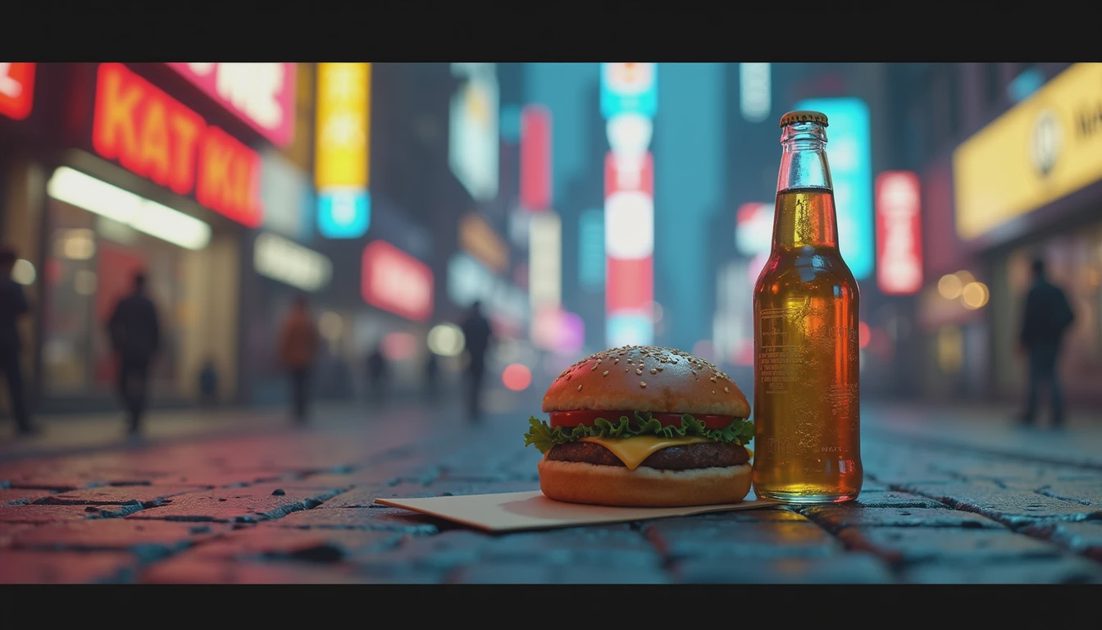
The commercials also make the city feel ideologically crowded. Residents do not just encounter different products; they encounter incompatible stories about success, patriotism, pleasure, and status.
A radio break can put those stories next to one another without stopping the player’s journey for a formal lecture.
Why these interruptions matter
A driving sequence gives radio advertising a particular advantage. The player is occupied with movement while the city continues speaking in the background.
The ad does not need to become a mission objective to contribute to the setting. Repetition can make a brand familiar, and familiarity makes its later billboard or storefront feel like part of an existing commercial world.
For a closer reading, compare three things:
The promise: what improvement does the product supposedly deliver?
The speaker: what kind of authority does the voice perform?
The contradiction: where does the pitch reveal what it would rather conceal?
Those questions work better than collecting the rudest line from each commercial. They explain why a short interruption can tell us something about the society surrounding the main characters.
FAQ
Are these complete transcripts?
No. This is analysis of three advertising concepts. Lyrics and extended commercial dialogue are deliberately omitted.
Are Shark Cards a story-mode money method?
No. The purchasable currency product belongs to GTA Online. Keep its real purchase system separate from the fictional radio pitch.
Does explaining a joke mean agreeing with its stereotypes?
No. The analysis identifies how the exaggeration works. Offensive behavior in a fictional advertisement is not presented as a desirable model.
The best of these ads sell more than an object. They sell a story the customer wants to occupy, then make the price of believing it difficult to ignore.
There’s always a story on the next block.