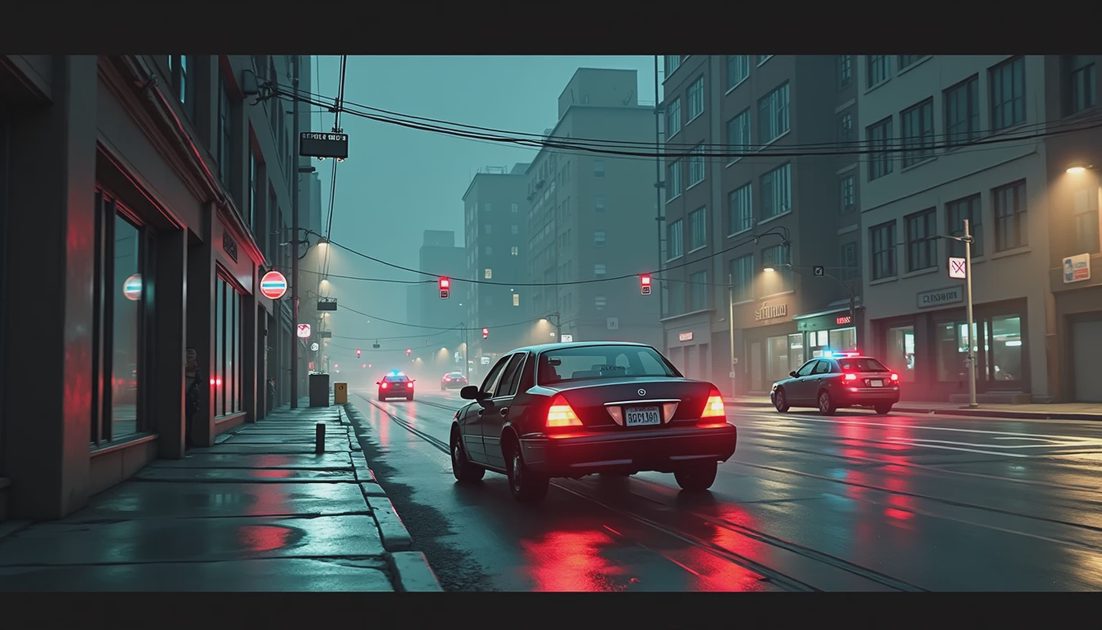
Getting away begins when the police lose sight of you. It ends when the search finishes without finding you again. Those are two different phases, and confusing them is why a fast escape can keep turning into another chase.
In GTA V story mode, distance helps, but broken sightlines and patience usually matter more than staying at maximum speed. A damaged car racing past another patrol can undo a promising escape in seconds.
This is a reference-based guide for ordinary unmodded story-mode free roam, not GTA Online. Scripted missions and restricted areas can override normal behavior. No fresh platform-specific test or guaranteed escape timer is claimed.
ON THIS PAGE
Read pursuit and search differently
A repeatable escape sequence
Roads, tunnels, and helicopters
What usually restarts the chase
FAQ
Read pursuit and search differently
When police are actively pursuing you, the wanted display and radar communicate an active chase. Once you break visual contact, the stars flash and search behavior becomes the problem to solve.
The important change is not that the police have disappeared. It is that they are looking for you rather than continuously tracking an unobstructed view.
That is when you should stop driving as though every second demands more distance. A quiet position outside the visible search coverage can be more useful than another risky lap through traffic.
Situation | Your immediate aim | Common mistake |
|---|---|---|
Police can see you | Break visual contact | Stop in a “hiding place” while still observed |
Police are searching | Remain outside their view | Drive straight into another search cone |
Search has ended | Resume normal travel | Commit another offense before checking the stars |
Mission controls the pursuit | Follow the mission requirement | Expect free-roam hiding to cancel a scripted sequence |
I prefer to think of the process as break contact, relocate, wait. It is simple enough to remember while the screen is busy.
A repeatable escape sequence
Start by creating a sightline break. A turn around substantial buildings, a change in elevation, or a suitable covered route can interrupt the police view.
Then move beyond the place where they last saw you. Breaking contact and stopping immediately at the same obvious corner can leave you near the center of the arriving search.
Finally, wait somewhere that remains outside visible search coverage. Keep watching the radar. If a cone approaches your position, make a small deliberate adjustment rather than panic-driving across the district.
The sequence is:
Separate: gain enough room to choose a turn safely.
Occlude: put solid geometry between you and the pursuers.
Relocate: avoid lingering at the first break point.
Stay unseen: monitor approaching coverage until the stars clear.
No single hiding place works under every approach angle. The method matters more than memorizing a location without understanding why it helped.
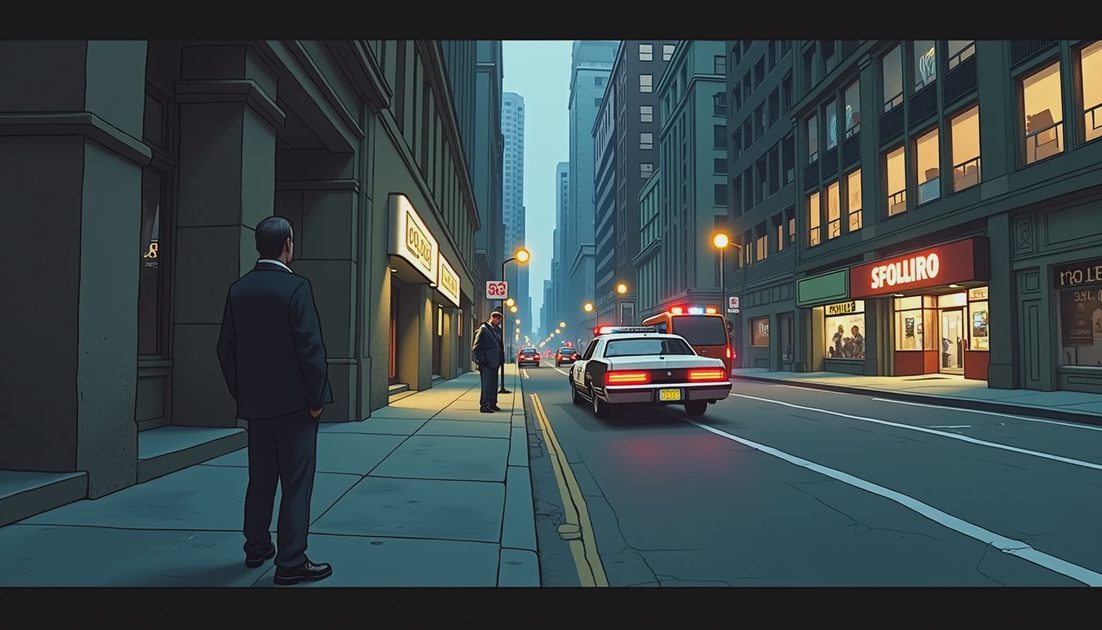
Roads: speed is a tool, not the objective
A long straight road can create distance, but it can also keep you visible. Dense traffic increases the cost of small steering errors, especially after the vehicle has taken damage.
Use speed to reach a useful turn or a place where buildings interrupt the view. Once you are searching for cover, the ability to choose a controlled route becomes more valuable than another few seconds at full throttle.
I would avoid repeatedly crossing major intersections without checking the radar. A route that feels like progress can simply expose you to more patrols.
The practical question is: what will prevent the next police unit from seeing me? If the answer is only “I will drive faster,” the route may still be working against you.
Tunnels and cover: understand the mechanism
Covered routes can help because they obstruct views from the air and reduce the number of directions from which you are exposed. That does not make every tunnel an automatic reset button.
Police vehicles may still enter. A poorly chosen exit can place you directly in another unit’s view. Mission scripting can also change what is possible.
Use substantial cover as part of the contact-breaking sequence. Do not assume the game has granted immunity because the vehicle has crossed a tunnel entrance.
The same applies to alleys and enclosed spaces. A location is useful when it interrupts observation and gives you room to remain undetected, not merely because it looks secluded from your camera angle.
Helicopters change the problem
At higher wanted levels, air support makes an exposed hiding place less dependable. Buildings that block a patrol car’s view may leave you visible from above.
This is where substantial overhead cover becomes more valuable. Check whether the route actually shelters the vehicle rather than only placing it beside a wall.
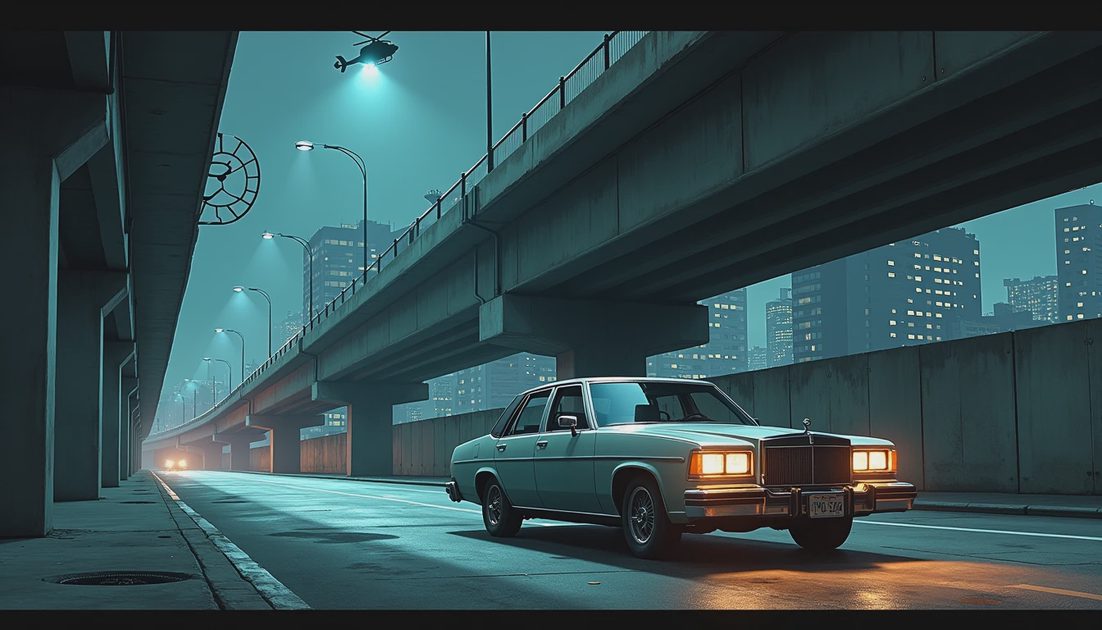
There are five wanted stars in GTA V. Higher levels increase the intensity and range of the response; they do not add a sixth star or turn ordinary free roam into a guaranteed military tank pursuit.
Trying to win a prolonged fight usually works against the goal of clearing the wanted level. Additional violence can sustain or escalate the response instead of allowing the search to finish.
Vehicle changes and repair shops
Changing vehicles out of police view can help with recognition. It is not a guaranteed instant clearance, especially if you emerge directly in front of another unit.
Make the sightline break first. A new vehicle does little good when the transition itself is plainly observed.
Los Santos Customs can sometimes help when the relevant entry conditions are met, but it should not be treated as a universal solution during direct pursuit. Mission restrictions and the current chase state can prevent the plan.
I would build the basic escape around cover and radar awareness, then treat vehicle changes or workshop access as situational tools.
What usually restarts the chase
Most failed escapes fit a few patterns:
Stopping before contact is truly broken.
Driving into a searching unit’s visible coverage.
Leaving cover too early because the sirens sound farther away.
Creating a new incident while the search is still active.
If the same thing happens repeatedly, identify which phase failed. “I cannot lose the police” is less useful than “I keep leaving cover before the stars clear.”
FAQ
Can I call Lester to clear this story-mode pursuit?
Do not import the GTA Online service into this guide. Story mode uses different systems and mission conditions.
How many seconds must I hide?
There is no universal timer promised here. Wanted level and circumstances matter. Watch the actual stars and search state.
Why will the stars not disappear during a mission?
The mission may be controlling the pursuit. Check its objective before assuming an ordinary free-roam escape method should override it.
The habit worth learning is restraint after the first successful break. Once the police are searching, give them fewer chances to turn the search back into a chase.
There’s always a story on the next block.